
Not In Passing: Walking By Design

Playing at walking
This first walk is infinitely soft. At 16 or even 20, we have nothing to bear but our lightest hopes. Memories do not weight on our shoulders. Everything is still possible, everything still to be lived. [...] It is the walk of happy sunrises, of the resplendent mornings of existence.
- J.J. Rousseau, Reveries of the Solitary Walker, 1782*
I haven’t found any better quote that expresses the fabric of meaning on which and of which we walk. Anyone over 30 will surely think of the contrary of what Rousseau describes; the more hunched-over walk, the resilient-resistant walk, the quickstep of being called somewhere... and they will very exactly feel the sting of having lost that walk of “the morning of existence”. The weight of that sting tells of the way in which walking is interleaved with human existence.
Ever noticed how much we walk in games, also? Except for some edge-cases like racing and flying games, we always walk. Walk walk walk, 9 times out of 10. In fact, I’m sure you haven’t noticed that we likely walk more in games than outside of them. As I’ve walked more outside of games, I’ve realized how important walking is in games, how it’s often the elementary foundation which all other mechanics are layered on. If you take everything out, the last thing you take will be walking.
Walk to the monster to smack it, walk to the NPC to talk, walk the dungeon to explore it, walk and run and jump; not all games let you jump, but almost all of them make you walk. And then, sometimes, games give you the power to stop walking, first with mounts and then with teleports. Others, like Elite:Dangerous, initially don’t let you walk and then base their entire expansion on making that possible. (Not being able to walk actually made it more realistic and interesting…)
Isn’t that fascinating? To design around walking? To ask: “how can we implement walking?” or “how can we skip the walking part”? I remember a dude in Elder Scrolls Online (ESO) with whom I used to run dungeons and he said something along the lines of “nothing good comes from rushing things, so I take my time”. He only said it once, but it was very true and I remember it many years on. I had a very on-and-off thing with ESO, but whenever I played with that guy (or when I adopted his attitude), the game suddenly became that much more enjoyable. Much like taking a day to walk slowly in an effort to slow down time, it felt good to stop rushing, to abscond from hurry and take long breaths; I was more attuned to the experience because I was more attentive to it. When you go fast, you start passing by things: it’s just a mechanical consequence, you have less time to pay attention and be in a space, as you move from space to space to space and only take in a fraction of what is actually there. It was nice to do dungeons with this dude because he wasn’t in a rush, he was enjoying the moment-to-moment and that was very special; it remains so to this day, where in many games many people will rush the game/dungeon/progression; worst of all, they’ll rush the story, the actual thing that we are pretending is happening. So we will pretend that what we are pretending is happening – is not actually happening. And the game will let you do it, or will even design for it.
What does that say about those games? Why design around walking, rather than simply take it out? Is that unfeasible? It seems very peculiar that designers might (implicitly) feel the need for walking to exist, yet work so explicitly to minimize its demands on the player’s time and attention. Slay The Spire takes out the walking, and just takes you room to room, as you ascend the tower: you might choose a room over another, but there is no walking per se; and this works, it’s a tense experience and, ironically, it feels like you’ve walked a long way when you get really far.
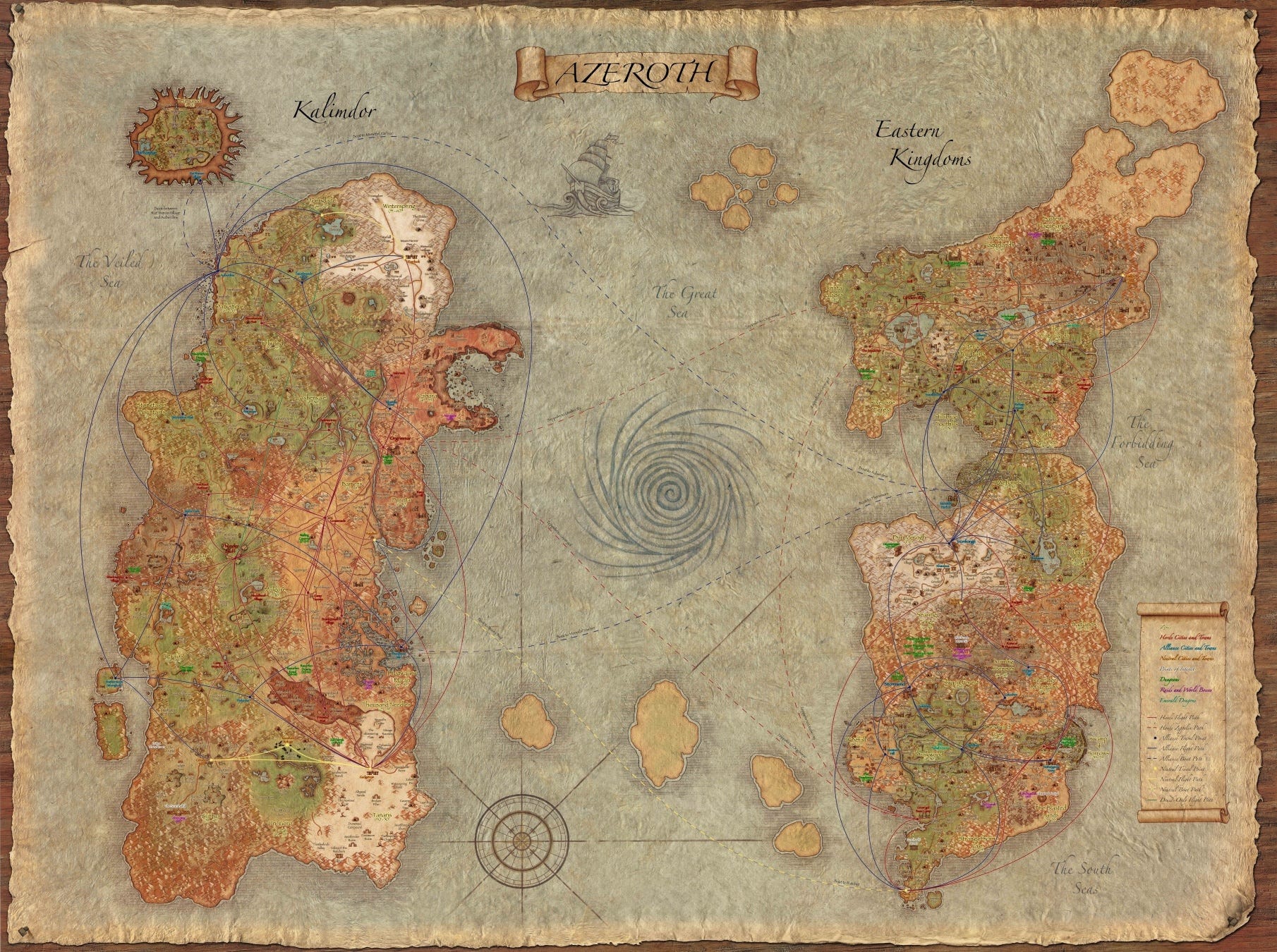
Take another example, of the contrary, of putting walking inside an experience. It’s 2004, World of Warcraft just released, with a singular promise that holds in its title: no longer level to level like its RTS predecessors, but an entire world, seamlessly held together, there for you to walk and explore. And a semantically rich and complex one at that, with Alliance and Horde territories/PvP, multiple capital cities, and hard endgame zones/raids that needed tens of people to coordinate with, or even the dungeon and other group content which you could not do by yourself (and which obliged to walk that much more). More than 20 years later, you will find many who hearken back to the experience and the feeling of exploring as you walked through that massive world with its dangers and wonders and need for community. Today the experience is very different, less about the topological wealth and narrative consistence of the world, and more as a theme park where you just go from ride to ride, all alone if you so desire. It’s much sadder, if you ask me. But I will always remember running circles around Stormwind, looking to join or fill a group.
Morrowind was 2002, Deus Ex was 2000, Thief: The Dark Project 1998, Diablo 1997, EarthBound 1994, Legend of Zelda 1987. We can probably go back a bit further, but each of these games did something special with the mechanic of walking: open-world, immersive sim, stealth, ARPG, experimenting on RPG tropes, and the proto-RPG, respectively. Coming back to 2025 and now 2026, how much does walking still influence and leave its mark on computer game development and innovation? Far from an exhaustive account, I do think walking remains important for defining what games can be, and later I will be talking about Death Stranding and Eastward as instances where walking is given an uncommon emphasis, to great effect.
Avenue of Lindens: to walk and to name
What does it mean to walk the land? Why even ask the question? I walk to my car, I walk to the grocery store, I walk my kid to kindergarten or the park... But I also walk because of other, less practical reasons: because I need to shake something off, because I want to see the trees, because I can’t stand to stay in place. Animals walk constantly, they walk their territory, and they walk out of their territory, only to return to it. If you’ve been in a situation where you could no longer walk, you also walk simply because you can, you will it.
I’ve walked more in the past year than at any other time in my life, and not because I was traveling. I don’t much want to travel anymore; I have grown fond of walking the land I live on. They say: “talk the talk, walk the walk”; they don’t say “walk the talk” as much, but it turns out we talk a lot, while we walk, especially to ourselves when unaccompanied. It seems we are, always, at least, in the company of ourselves.
That is not strictly true, though, is it? The self seems to be more of an optional development. Our bodies and neurology give the conditions for the self, but they don’t impose that development. Thoreau wrote (and I paraphrase) that he didn’t really meet many people when they crossed, because they were busy with their affairs. Walking is very much the opposite of being busy. Could you say “I’m busy walking”? It would be a funny thing to say.
The big problem at the heart of walking is that it is, at the same time, important and not important. It seems like a chore if I miss the bus and have to walk. But a lot of important things happen when I walk, besides the all-cause mortality reduction: I have to be with the world, and I have to be with myself. More importantly, the more I walk, the more the two start melding together; the world takes some of me and I, some of the world.

Before walking, I had a mostly alienated relationship with my environment. I have lived in the same place for 7 years, and it is only within the last year that this place has started to mean something to me. This is no joke. I used to consider the park close to my home as some derelict tiny commonality, and it has shape-shifted into one of my favorite places ever. My street is a numbered street, ie. XXth avenue, and only after 7 years did I finally see that it’s lined with linden trees, like in front of my place; I call it Avenue of the Lindens now.
It bears thinking about that. XXth avenue is a kind of prison of the mind: “just a number”. But walk the land, and you start giving names to everything. True names. I see animals marks in the snow: others walk this land as I do; it is something we share. Suddenly, it matters to me to sweep up a plastic cover on the street, crushed by a car into pieces that will spread. There’s turkeys and squirrels and kids and me who walk here; the littering bothers me and them. The trees give shelter of rain and snow, and they also carry the morning’s light which gladdens the eye. They are exemplars of patience and persistence, of the strength to remain standing in the merciless weather. Suddenly, their names matter, I want to know them. This is the oak, whose leaves become crinkled and two-faced in the winter, before they fall. That is the larch: as a game with my child, I greeted it every morning, but now I see it yellow, then brown its soft needles before they fall at a touch.
I see things in passing, but they remain. A mother runs after her child gone rogue, as we pass by and laugh at the situation; she sees and warms up, it is no longer a struggle but a game. One morning I see a fat raccoon climbing a tall fir and hiding at the top, and I look for it every morning after. I have run my hands through tall grass as I rode my bike next to it. I have sat in summer on the hill, warmed by sunlight, soothed by birdsong and the brushing of leaves; as I have pushed the sled down the hill after first snowfall. By day and night, many a times has the moon hung over the streets, re-involving the scale of the cosmos into the banality of XX, adding insult to injury. But Avenue of the Lindens, that is something that can withstand the moon’s mockery.
It is mistaken to believe this would lead to some sort of placid self-satisfaction. Each day brings a new demand and a new hope, with its possible disappointments. The land demands to be brought anew under the step of knowing, of trying, of being. In the summer, the park is full of children until late in the evening; but it is as if winter has reaped them all, and the playground remains deserted. I too need to know myself, what time and the seasons have done to me, and walking the land helps me do that. How much has changed, and how much remains the same? The problem of time: thankfully everything doesn’t happen at once, but things also inevitably come to pass. Why does walking feel like it slows down time, like it has more success battling it out against its passage and the passing of ourselves? I Remember Seneca’s Shortness of Life: time is the most precious of things, and many complain they never have enough time; but life is not too short if lived in an intentional way. It’s a way, a path; what else to do than walk it. Every day demands a new, complete and uncompromising engagement with it; at some point, one day will be the last.
**
Stranded in solitude
I remember thinking, when I finished the first Death Stranding: what a wacky story even for Kojima. But as I’ve started playing its sequel, I’ve realized I now actually appreciate what that game had to say. Not just because Covid happened, but because six years have passed and a lot of things have happened during that time. As I’ve learned to pick up the pieces, so doing has also taught me to speak the language of that game and its artistic aspiration.
Voidouts, Beached Things, isolation... all of these find their expression in what the game is actually best at: walking. Because walking is a most solitary experience, in-game as much as in reality. It is very rare to find someone who can share your path, as in really share it, not just be physically there; solitude is sometimes even more pronounced when walking with someone else. The Death Stranding is very much about that cosmic solitude, and it is the case even more so in the sequel. Spoilers incoming.
The sequel finds its way in crystallizing the walking experience even more: Lou has died, and the baby pod you’re carrying is actually empty; Sam is imagining/hallucinating that his baby has somehow found its way back, as a newborn, into his pod. It’s the expression of a solitude of existence as much as the desire for companionship. The music often helps understand the texture of this experience, and becomes another facet of that solitude-companionship dynamic. The tracks are often instrumental, airy, with electronic distortions (like the Polacheck theme).
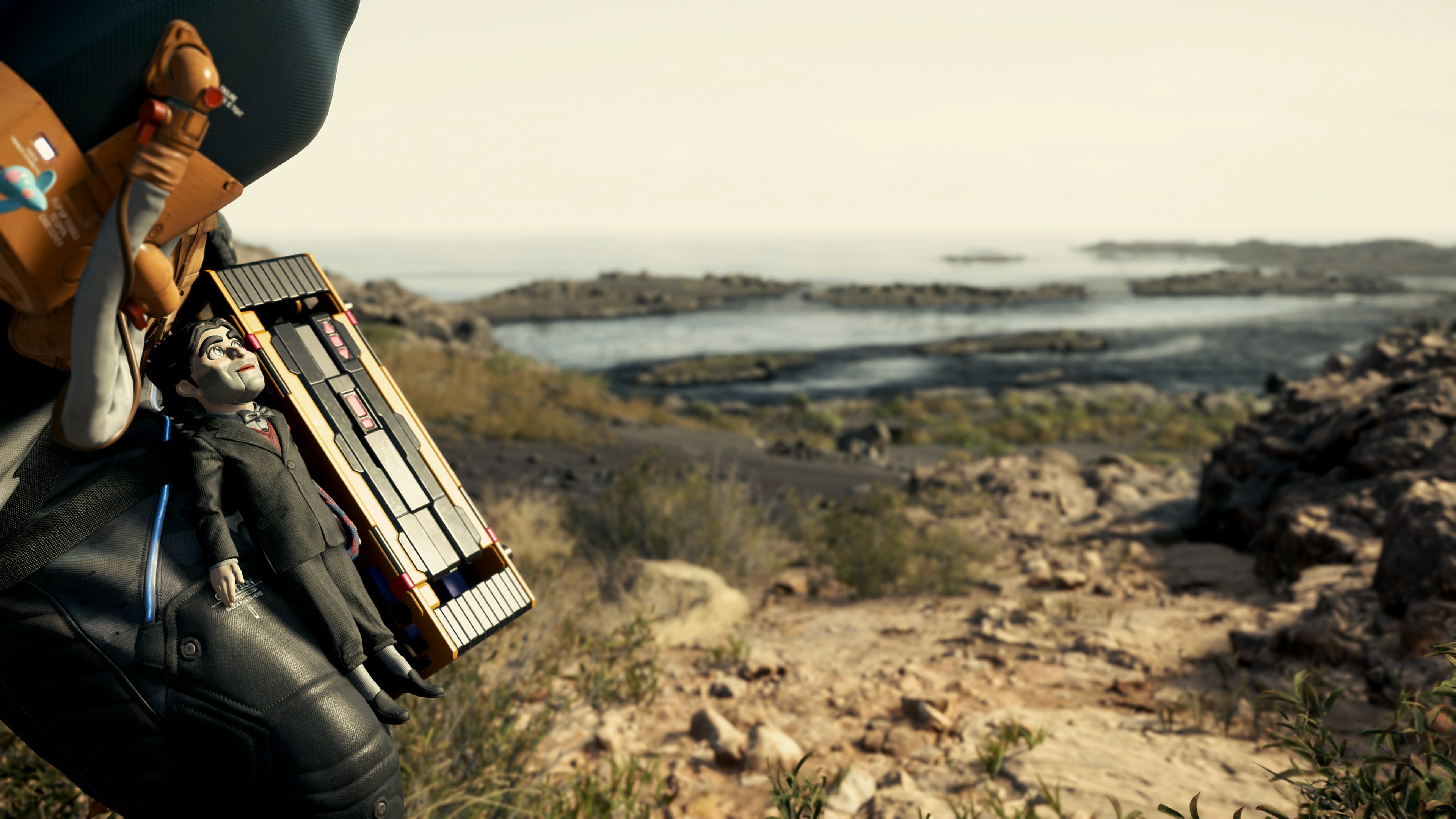
Up to where I have played, the game hasn’t put this forward in a direct way, it has only hinted at it, but it’s fairly obvious: Sam is being manipulated into extending the network with the one thing he cared about, his child. This is simultaneously the game narrative’s strongest and weakest point: Sam has no good reason to accept Fragile’s first request to leave Lou in her care and go into Mexico; the whole game sequence is super weird, insofar as it lets you refuse and enter a kind of time loop until you accept. And once Lou’s gone, Sam is shown to be suicidal, having nothing to live for anymore, everything past the point of Lou’s death tinged with the tragedy of a man DOOMed to err the earth until the Fates untie the thread that binds him to his world. This is why he doesn’t question much of what goes on around him past that point, he becomes gullible, puppeteered by Dollman, doing pointless busywork and trying to make sense of his persistent existence. This is the game’s vibe, and it’s much more articulated than the first time.
But it’s the story’s strongest point because it tinges everything that Sam does afterwards: all the walking and delivering become aesthetic activities, ways of NOT committing suicide, things to do once the world has failed him and his chance at happiness.
In this sense, the game is 100% “expressivity”, how you choose to get to a place, without having much motivation to actually get there. Sure, you sometimes get rewards, but most of these feel superfluous when they’re different levels of shotguns or bigger cars trucks to transport your deliveries with; most enemy engagements are uninteresting despite the wealth of weapons at your disposal (boss fights excepted, because they’re dangerous and you have to figure out on the spot what to do, aka pure excitement/entertainment); stealth and camouflage are much more memorable in games with explicit mechanics for that (MGS4, Splinter Cell). The best rewards are those that enrich your capacity in engaging with the puzzle of you and the topography, of giving you ownership over your process of play.
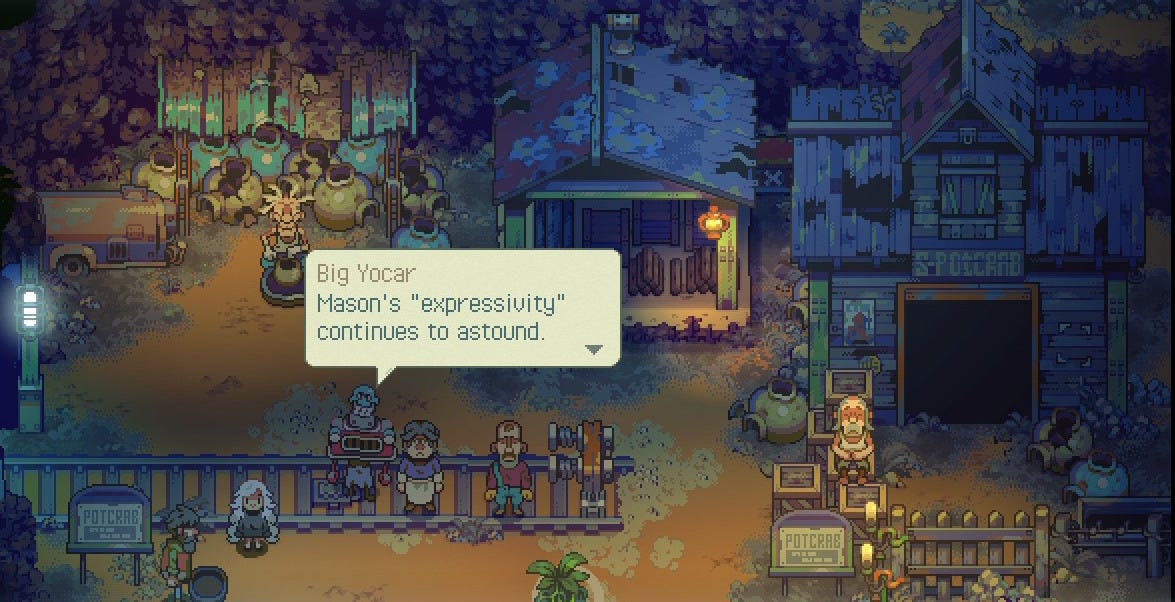
Two categories of elements thread themselves with the essential experience of walking in the game:
1. Backtracking means something. Places whose initial experience could be fear, difficulty and discovery, these places are transformed when you revisit them, this time in control, with a more mastered perspective, from which you can also manifest a richer contemplation. The game expressly and explicitly creates these moments, especially with its use of “set-piece” music; who would’ve thought backtracking could be a set-piece? Thanks, Kojima.
2. Every layer of “design” over that simple idea of walking the land dilutes the experience. Sometimes it even more than dilutes: it kills the part of the brain doing the long, ample waves with jolts of cheap dopamine (the road building, the social aspect). Not only are these layers unnecessary for the aesthetic experience, but the more they grow in importance, the flatter the walking becomes. The more “obstacles” and enemies they put in, the more gamified the experience is, the less it can compare to the coarseness and existentialism of taking walks in real life and being confronted with one’s shortcomings and mortality (what the whole theme is about). Just take the BT’s: initially extremely terrifying, just until you realize you can see them from a very large distance and have all the tools you need to take care of them.
In a recent video interview with Wired, Kojima said he likes to put a lot of gameplay mechanics in his games, in order to let players experiment with them in ways that can be foreseen and not by the developer. That is a great theoretical underpinning but which can lead to what Kant might have called blindness: many of the mechanics you add, if they have no strong enough link with the “idea” of the game, with it’s elementary contrivance, lead to the contrary of emergent gameplay. Flooding and the stamina loop mechanism (the less you have, the faster it drains) are interesting in theory, but they don’t actually do anything past the moment of their introduction; it’s the same with rock “quakes”. I’m not a big-shot game designer, but it seems to me that floods are scary in real life only insofar as they can damage important structures like homes and bridges (and even threaten lives), difference being that in real life these take years to replace, while in-game it takes a single trip with some resources and the repair is done.
Maybe if you had a valley that would become nigh-impracticable because of floods, and you would have to navigate that extreme difficulty and treacherousness of the water depth? Ultimately, it feels like all of these attempts don’t take account of the game’s narrative amplitude: maybe the best use of floods would be to take the player near them in order for them to feel Sam’s temptation to drown himself. That would feel in the spirit of the game’s vibe.
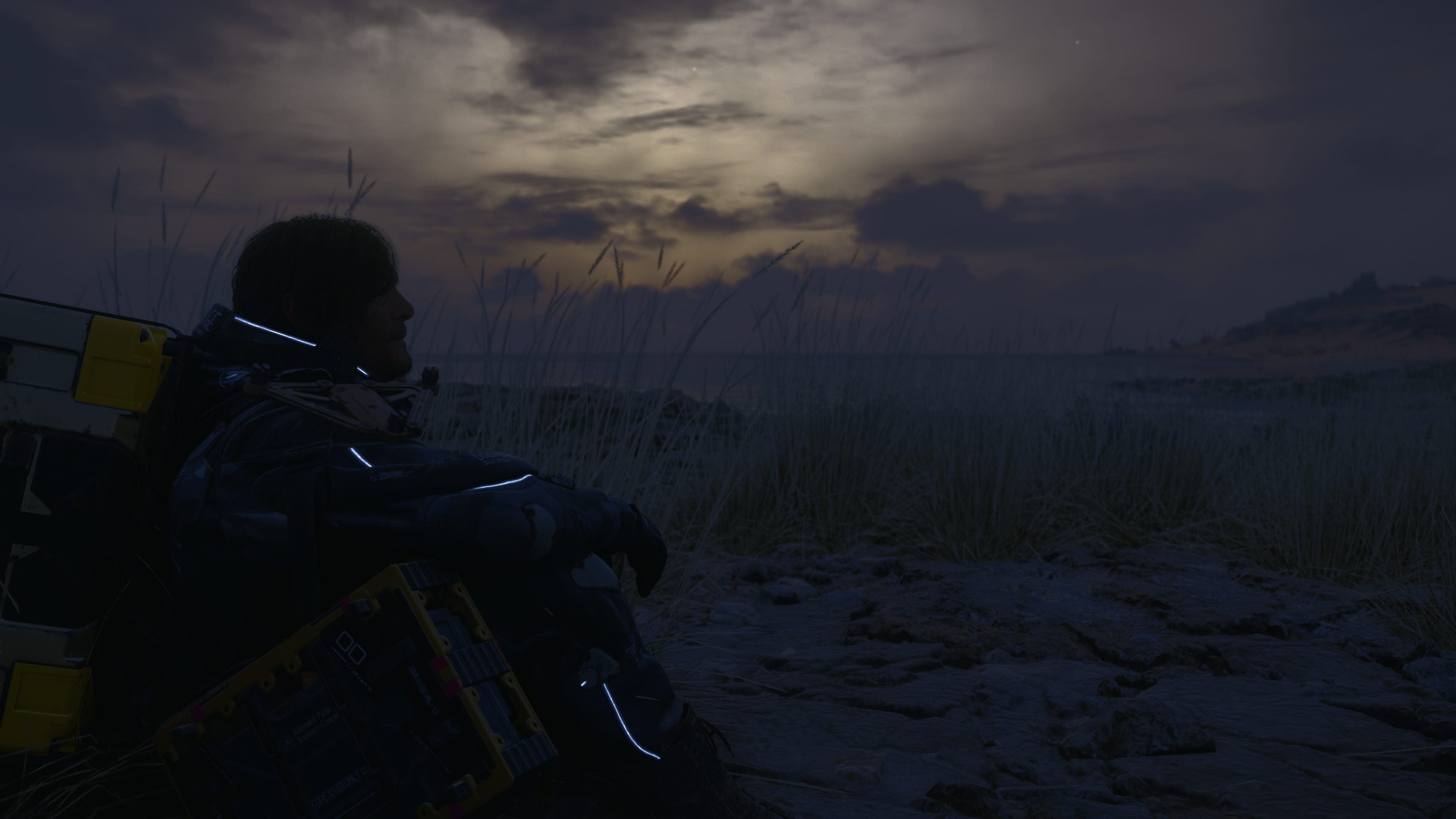
The point I’m trying to get at is that these mechanics do NOT create emergent gameplay when they do not strongly tie in to the narrative being unspooled. Those moments of emergence rather happen when the player succeeds in FURTHERING the game by means not explicitly shown or destined for this use. Here, the game is not furthered by these elements, as I’ve tried to show; they’re, at best, fun distractions from the very sad and serious situation of a man who has lost everything, who regularly has nightmares and who is trying to find a way to be at peace with the world, and the solitude and suffering that it has imposed on him.
Every step is the most important step
Eastward spends 5-7 hours setting up its plot, with no drip-feed and no gameplay repetitions. Think about that! Except for maybe books, there is no medium that can do this, that can just spend 5+ hours setting up its plot; movies, TV series, music, theater, most of them are over within 2-3 hours, most even before the one-hour mark. Even more remarkable is that Eastward does this mostly by... WALKING! There are some mini-games, a full game within the game (also with walking as a central time mechanic), a bit of inventory, a bit of combat. But it’s mostly walking and story.
And the story is good! The time it takes to set it up is so worth it. There’s no filler, it’s all genuine CHARACTER: that’s the secret recipe. Character.
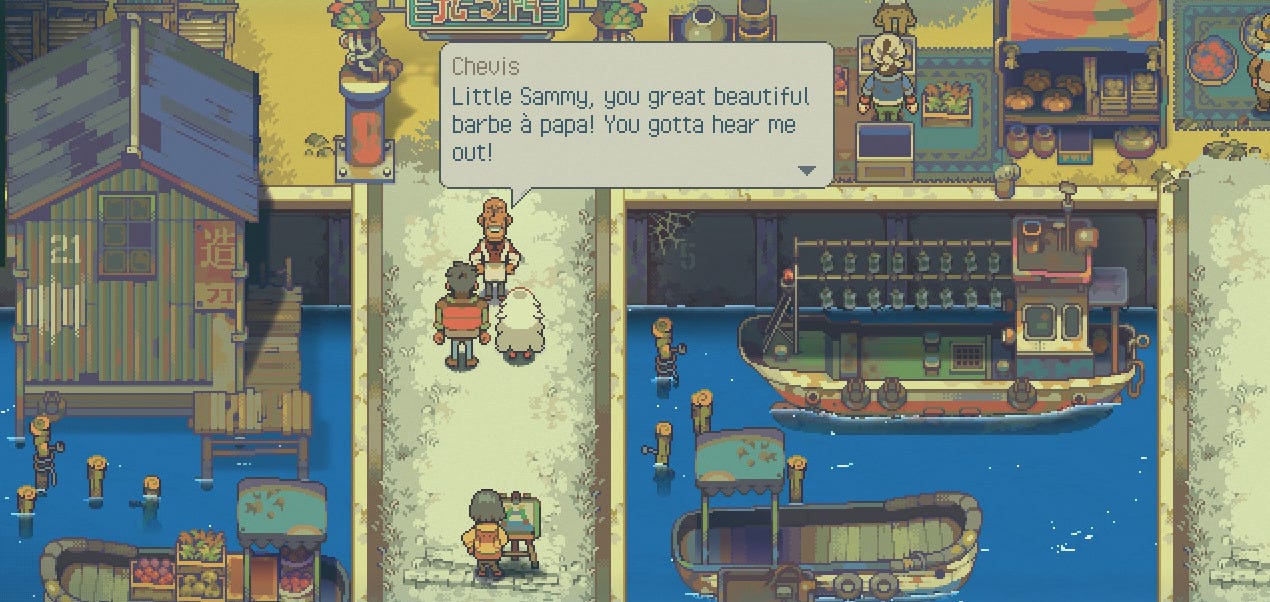
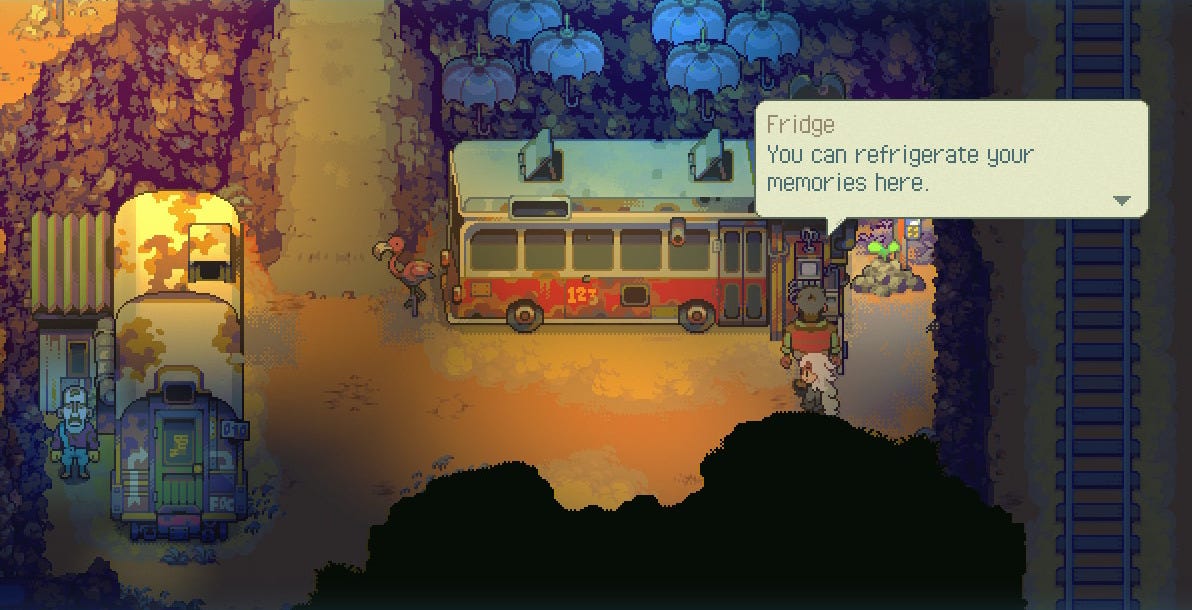
The objects have it: for example, you save through fridges, and every fridge has a different blurb about the meaning of memories and trying to “save” them; each of your weapons is significant in some way to a situation or character; even quest items all attempt to be memorable in how you obtained them; not only that, but some quest items just sit there, but others unexpectedly are useful much later in the plot, and you never know which, so that encourages you to pay attention to all of them. ALL objects have funny or interesting descriptions (mostly funny); WoW used to know and recognize the importance of item descriptions (the trash item descriptions) but it has lost the will/knowledge to craft these and delight the player.
The writing has it, too: the main characters are sweet and have a genuine relationship with one another, despite John being a silent protagonist; secondary characters are all unique, there is no generic NPC and you can talk to them all; they also often change locations and dialogue depending on plot advancement; some, like Jasper, become more, such as vectors to the theme at that moment.
The locations and art have it, and they actually have it more than anything else: actually I find it somewhat unbelievable how the same care that went into each character, no matter how significant or not to the story, also went into the design of the cities, especially; the adventuring areas are pretty enough and varied and with their own colourfulness, but places like Potcrock Isle, Greenberg and NewDamCity are just incredible achievements that are worth celebrating much more than what the game seems to have been acknowledged for. It’s simply incredible to WALK in these cities and look at... anything: the ground is in some parts more trodden and worn down than others, small objects litter corners where no sweeping has been done, air conditioners and potted plants and each door special with its own handle and window design and rooftops of different shapes and sizes and colors and styles and signs galore and huge fans and slithering pipes and colorful ramps and the foreground silhouette of lampposts or electrical poles. It bears saying and repeating: Eastward’s inspired use of graphics and shaders is a perfect example of the argument that art and graphical design trump fidelity (and today’s ray-tracing) ten times out of 10.
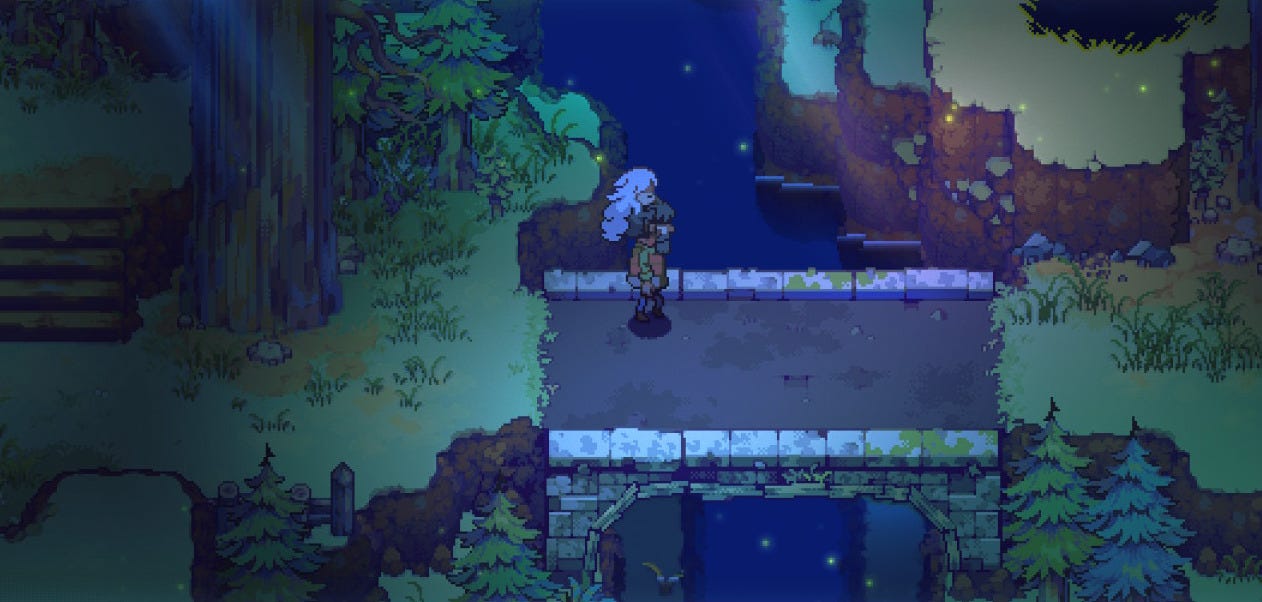
It is astounding in a way I have honestly never witnessed in a game. I’ve played your Cyberpunks and your GTA’s and you Mafia’s and your MMO’s and all of them have some fault, some excess of ambition which has to be compensated by some aspect which is downgraded, made ugly, bare or nonfunctional; this unraveling invites dissonance, and the magic falters. I spun up Cyberpunk just yesterday to take a ride through the city, and I can tell you that, while the graphical fidelity is very impressive, everywhere the same dissonance seeps in, with low textures, pop-in, wrong geometry, reused assets, weird physics, filler NPC placement; it’s just jarring to be there, if I try to seek the spirit of the city, as Montesquieu might have sought the spirit of laws.
But in New Dam City, I have felt the breeze as I looked on at its summit, next to the Coin Palace. In my mind, I have mapped where Princess Avenue, the subway, the Earthborn arcade are, I know the stores, the store-owners, their eccentricities, I look forward to see what Dr. Zhi (reference to Dr Zhivago FOUND) and Ned are discussing this time, I wonder what the brash but still sympathetic construction crew are up to today. How? Because I have walked the city over and over and over, I have memories of its places and important things that have happened there. And every time I go through those familiar stairs, streets and alleys, I remember. Indeed, just as in DS2, backtracking is important and happens often, but in a different way: it’s rather about taking note of times of day as the story advances, about knowledge/awakening that materializes the space into a fabric of critique and a vehicle for praxis, and for praxis specifically as the implicit insistence that contradictions play themselves out to their very end (glazeberry scene in front of Alva’s building), without trying to solve or short-circuit them. It’s this kind of existential confidence in one’s own substance as an offshoot of a world where everything is still possible, because we are in it; obviously a very enabling perception of self. And notice it is indeed a perception of the self that is involved here, something that will come up when talking about Kant later.
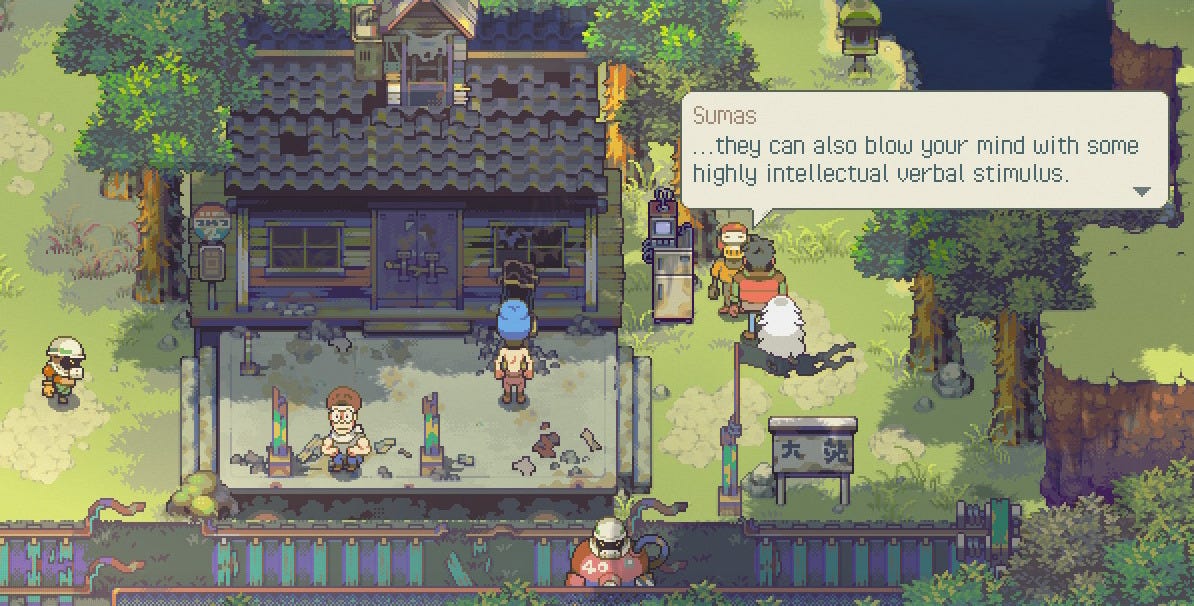
Each zone seems to have its own special meaning it is conveying when backtracking:
- Potcrock Isle is very much about the critique of power based on the ignorance of the one’s it is subjugating, and it’s quite funny because this is reflected in its very name (Pot and crock mean the same thing, and it is most definitely not an island!...)
- Whitewhale Bay, in turn, wants to explore what it means to develop belonging to a place, and how this belonging can develop through different ways and means (finding reciprocity and friendship for Jasper, a star-crossed meeting for John&Sam)
- As for New Dam City (cause I haven’t gotten any further, YET), it’s the biggest and most important place in Eastward, the central hub for much of its story’s development and realization, and where a lot of characters get their limelight to establish their personalities; but New Dam City was built on technology and its continued relevance is based on the power of that technology and of the people that were the impetus to that development, point being that technology creates dependence and thus it is only as “good” as the people behind its creation and maintenance.
Even though chapter structure can be generic as an exploration-combat-boss fight-story resolution loop, it is bewilderingly delightful to be confronted with the developer’s seemingly never-ending creative endeavor, of observing how that resolves in the game itself. At the risk of repeating myself, the most significant way for the player to actually encounter all of this is the simple act of WALKING. There’s an interaction mechanic whereby you can interact with many of the world’s denizens and objects, albeit not all of them; but it makes you WALK, it makes you go to the interactables, to see if indeed they are interactable; the reward mostly being good writing to delight you (!!). Zone introductions (that happen at the beginning of each chapter) feature the only zoom-outs of the game, have no interactivity and are completely silent, as if their only purpose is to make you walk through them and take in their meaning at scale.
Before delving as far as I can in this post about why this works, why walking can be so utterly effective in concentrating and aligning our perception with the world and ourselves, I want to finish with Eastward by saying that the game is very much a walking simulator interspersed with mini-games and light combat; the game counts on its capacity to enchant the imagination with the beauty of its world and the hope of its relationships, a staggering aspiration in the medium of computer games which most often slips on the slippery slope of genre and commercial calculations. While many RPG’s and story-heavy games (Pillars of Eternity 2 is famous for having been delayed in order to keep up with Baldur Gate’s 3) invest massively into 100% voice acting, games like Eastward (and its cousin Sea of Stars, which I’ve also written about) have ZERO voice-acting; Eastward relies on sound blips while the characters are printed into their word bubbles, and it has the “secret weapon” of its incredible writing and whimsical nature to power voices into your head by way of your imagination, each character being so unique that their “voice” comes through the manner in which the writing concentrates their personality. Perhaps this limitation acts as another impetus to really push characterization and how that expresses itself through simple writing.
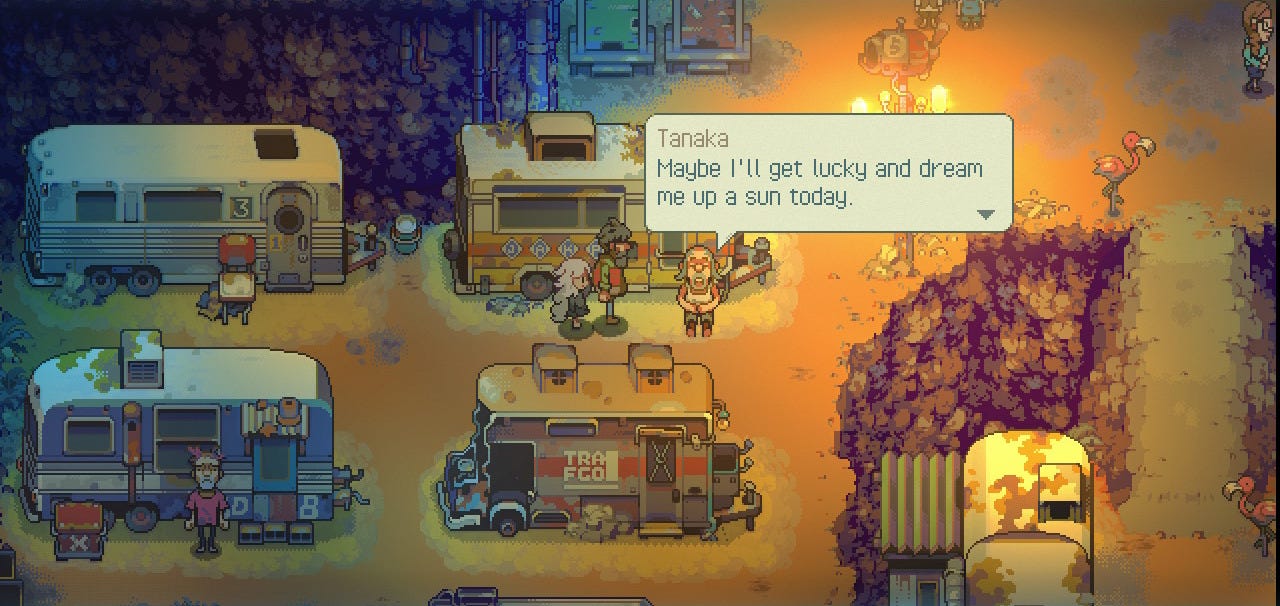
In all of this, and much like Uva’s love declaration in Chap. 2, when she walks to help express herself and the magnitude of her feelings, Eastward is a resounding demonstration of the power of walking to enrich one’s conscience and to weave one’s destiny into the fabric of the world and its inhabitants; of the power of walking as the quintessential manner of being in the world, of the world and for the world. Its dystopian, ecological disaster theme is an echo to the dangers of staying still and losing the marks of that path on which the world as much sustains the person as the person sustains the world. I like to think its postulate is one where mental mapping through territorialization is the key to the world meaning something, and of ourselves flourishing along with it; playful, light-hearted, joyful, child-like.
**
Kant: of bucks and of sieves
In The Old Ways, Robert Macfarlane recounts his etymological discovery, that the word “learn” actually traces its roots to liznojan, ‘to follow or to find a track’. How fitting that to learn should, by its origin, mean to find one’s way: learning and understanding very much feel that way, once you see it that way. This is particularly relevant when trying to read Kant’s Critique of Pure Reason; you absolutely need to read everything; if you read just a random sentence you are guaranteed to be lost and, what’s more, likely to consider it as mumbo-jumbo. Kant is also one of the worst subjects to ask an AI about, for much the same reason: the AI has no idea what is going on, and it will regurgitate some commentary it’s seen but Kant is very much a writer which needs to be read extensively. No summary seems to do the job.
What does Kant have to do with walking? I have come to believe that what Eastward (and games like it) achieves by way of walking can speak to our experience of the world as human beings, and much of this belief has formed by reading and trying to piece the puzzle of Kant’s Pure Reason. There is something that changes in our perception when we begin to walk, and walk the world in direct communion with the sky; treadmills and tunnels don’t count much. Each person’s interoception might make this slip in perspective more or less subtle, but it’s something that anyone can notice if paying attention.
The eye that sees the things of today, and the ear that hears, the mind that contemplates or dreams, is itself an instrument of an antiquity equal to whatever it is called upon to apprehend. [...] And of these many folds in our nature the face of the earth reminds us [...] we are aware of the passing of time in ways too difficult and strange for the explanation of historian and zoologist and philosopher.
- Edward Thomas, The South Country (1909)
Sensitive as he undoubtedly was, maybe we can rise to the challenge of philosophizing about this. Before plunging into the deeper recesses of the matter, for me it’s crucial to describe Kant’s posture as a philosopher: he stands very much as a pedagogue and it is clear he holds dear the concern that his readers understand him. The book is huge and it is in large part because Kant explains a lot, and will often re-explain whenever he has the pretext to do so. At the heart of his impetus to write is the preoccupation with “judgment” and its recurring tendency to overreach; in the beginning, he has this joke that we should very much avoid a writer-reader relation where one milks a buck while the other holds the sieve.
But let us jump deeper into it: what Kant judges to be legitimate propositions about conscience. Perhaps the best way to do this is by way of the latin maxim “Gigni nihilo nihil, in nihilum nil posse reverti” (Nothing is born from nothing, in nothing nothing can return); Kant makes reference to it and it’s a good way to situate the problem of the attempt of conscience in studying itself. A first reading might underline the categorical congruence at play between nothing and nothing, which makes a lot of sense; a second reading might notice a more “conceptual” level opposition between “no thing” and “nothing”; maybe a third reading would start seizing the nihilistic suggestion that an entity might be born and still be, metaphorically, nothing.
The question thus becomes: how much of a something are we, really, compared to the night of nothing? And Kant is actually surprisingly eloquent about his arguments concerning this. His basic stance is that we can be certain that we are affected by ourselves and by the world, and that thus there is an objective basis to our perception. How much of a basis is a matter of... both intensity and extensity: while we may feel certain sensations by degrees, that is, intensively from 0 (no feeling) to anything above that in varying degrees, we can also “feel” something extensively, through the representation of a successive synthesis (a space is the sum of the smaller parts of space in it).
It would be unfaithful to Kant to say that “what concerns ourselves is the latter, extensity as a proof of human reason”. Every text is also a literary text, and I gather from my reading of Kant that he is very aware of the role sensitivity & feelings play in our lives. We are very much beings of emotion, and yet (goes the vibe of the text), if we were to try going further, here is another kind of mental matter which is “transcendent” to our feelings and sensations. What kind of mental matter? To put it in a word: objectivity.
The conscience of my own existence is
at the same time
an immediate conscience of the existence of things beyond me.
- Kant, CPR, p. 263 (my translation)
How does this tie into walking and into Thomas’ intuition about time and walking? Quite neatly: Kant’s spiel is that objective reality must relate to an object and find meaning in it, but this supposes the object must be given in some way; and to give an object is to relate the representation of that object to experience. The kicker here is that experience can be real or possible: here we circle back to our extensive conception of experience whereby the possibility of experience rests on the synthesis operated by a unitary conscience that orders and regulates our awareness, without which experience would be “nothing but a rhapsody of perceptions” (203). We have a conception of reality, so to speak, composed of both our lived experiences and of our possible experiences. This is the way by which contemplative writers like Thomas can so powerfully invoke realities outside of their immediate existence: they are spiralling their gaze into the possible.
By this argument, objectivity is proven to be true, objectivity by which reason and understanding can also become true. However, while we have some sort of “access” to the “transcendent” realities of objectivity & understanding, we remain beings of intensity, not extensity. Objective reality is very big and very messy, and while we can “intuit” the formless foundations of reality (time & space) we have no chance of tracing any “extensive” line documenting all of the successive (& continuous) states of an entity or event. For Kant, this is a weakness but also a liberating aspect, and maybe this can inform our own posture about walking.
It’s a weakness because categories are not tightly aligned on reality, and ideas are even further away. These ideas “contain a certain wholeness to which no empirical awareness can attain, and reason only sees a systemic unity to which it attempts to assimilate the empirical unity, without ever succeeding” (499). But precisely because of this, a certain degree of freedom is allowed to mankind: “the highest degree to which humanity can aspire (not any more than the insurmountable distance which separates idea from its realization), none can nor should determine, for here lies liberty which can always surpass any limit it is assigned” (335).
Fundamentally, this is why prisons need yards, and why every person needs to walk. It is walking that puts our mind into motion, and by which we become conscious of space; because of the conscience of space, and because we can’t do much else than walk when we walk, it is how we also become conscious of time. These two elements, if Kant is right, are enough to make us conscious of our own embedded-ness in objective reality, and of the inadequacy of our intensive existence to seize reality in its extensity; but it is precisely this insufficiency, seen through the lens of extensive-transcendental categories, by which freedom can be borne. Simply put, walking embroiders a depth and scale into our minds through which we can affirm our own liberty.
So many games use walking as a fundamental mechanic because walking is fundamental to our own perception & understanding of reality, of our place in it; in games, it is through walking that we can discover, progress, befriend, alienate, aspire and achieve; it is maybe even more so the case outside of computer games, which is then all the more disconcerting that cars and computers, by their ubiquity and utility, have made many of us stop walking. But walking spontaneously, under the relation of causality, starts various series in the middle of the world’s proceedings; and while not necessarily salutary, they are all the more dear that they make it possibly so.
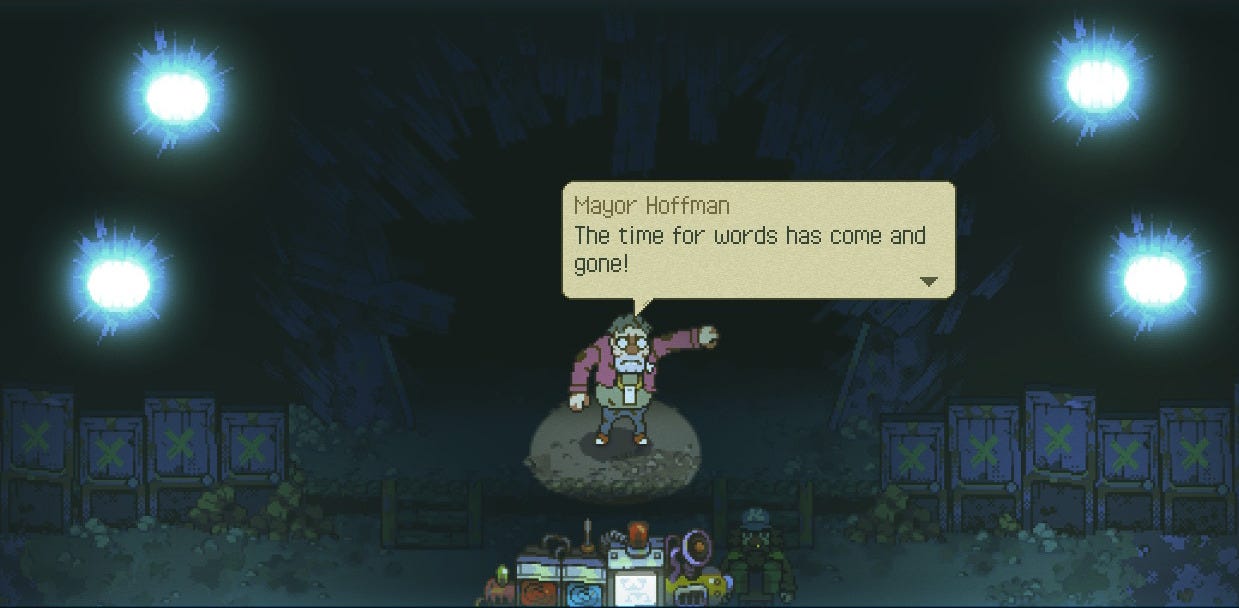
* The original french version of Rousseau’s quote: “Cette première marche est infiniment douce. À seize ans ou même à vingt, on n’a rien à porter que ses espérances légères. Les souvenirs ne pèsent pas sur les épaules. Tout est possible encore, tout est à vivre. [...] C’est la marche des aubes heureuses, des resplendissants matins de l’existence”. Translations do not do it justice.
I was thinking about the role of walking in games as well, and I love walking and can usually walk through a mid-sized European city within a day. When there is a huge amount of walking I feel that the game should be more introspective, more philosophical to accommodate the "down time" giving you time to reflect on your actions and consequences. If your actions are only killing five random enemies at a time, walking is just a chore and there should be other means of traversal.